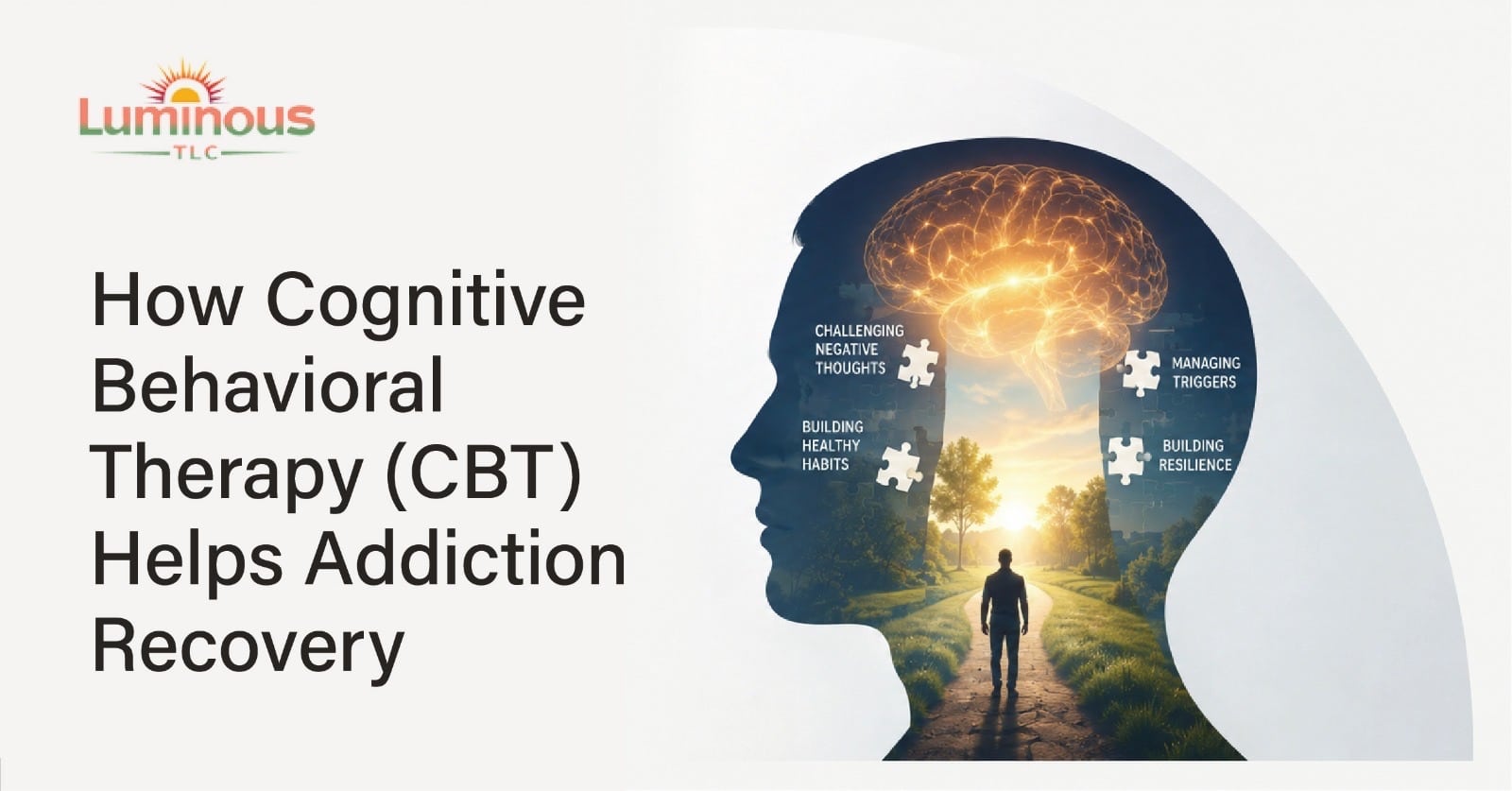
Cognitive Behavioral Therapy plays a vital role in helping individuals overcome addiction by addressing the negative thought patterns and behaviors that contribute to substance use. It may be challenging to figure out what path will take you toward recovery when addiction impacts your health, relationships, career, and even happiness. Most people believe that the beginning and end of addiction recovery start and stop with detoxification, but there is more to overcoming the problem.
Cognitive Behavioral Therapy provides individuals with practical skills that will allow them to explore the thought patterns and feelings behind the problem. Instead of controlling the symptoms, CBT helps to discover underlying reasons for the problem and gradually break the cycle.
With the new knowledge about your addiction, self-esteem will slowly grow, and you’ll start believing that recovery is possible.
What Is Cognitive Behavioral Therapy in Addiction Recovery?
Cognitive Behavioral Therapy is a clinically proven type of psychotherapy that focuses on connecting thoughts, emotions, and behaviors. It allows discovering and eliminating unhealthy thinking patterns, managing emotional experiences, and creating healthy responses to help achieve the goal of long-term recovery.
Common objectives of CBT include:
- Identification of triggers like stress, conflicts, or particular situations
- Discovery of unhealthy thinking patterns
- Development of healthier coping skills
- Improvement of relapse prevention strategies
For instance, a person who is used to drinking after a stressful day can develop new approaches that will help him/her manage feelings to prevent craving. In that case, every positive decision will bring one closer to recovery.
How Does CBT Break the Addiction Cycle?
Addiction often develops due to repeated patterns of thoughts which may seem normal in the beginning. For example, one may tell himself/herself “a glass of wine will not hurt” or “it is the only way to relax.” But in most cases, these kinds of thoughts will quickly push someone into substance abuse.
But CBT slows this process down. Patients are encouraged to identify unhealthy thinking patterns that will make it possible to respond to them more healthily.
The treatment process includes:
- Identification of thoughts and triggers
- Practicing healthier responses to cravings
- Role-playing scenarios in risky situations
- Development of a personalized relapse prevention plan
| CBT technique | Benefit to recovery |
| Trigger awareness | Lowered relapse risks |
| Thought restructuring | Formation of healthy thinking patterns |
| Coping skills | Replacement of substance use with healthy behavior |
| Relapse prevention planning | Improved long-term recovery |
Why Cognitive Behavioral Therapy is Suitable for Modern and Luxury Rehab?
Clinical studies still prove that CBT is one of the most effective addiction treatments. Moreover, CBT works well in combination with holistic therapies, medication-assisted treatment, nutritional counseling, physical exercise, mindfulness, and family support.
And since luxury rehab facilities also provide patients with privacy, comfort, and personalized care, most people can relax, recover emotionally, and concentrate on recovering without any distracting factors.
Conclusion
Healing involves making changes to the way people perceive their life challenges. Luminous Care offers Cognitive Behavioral Therapy, medically supervised evidence-based treatment, holistic wellness programs, and a personalized approach in a peaceful environment of a luxury rehab facility in Florida. Every recovery journey deserves respect, dignity, and professional help.
If long-term recovery seems unattainable now, then calling The Luminous Care may become the first step toward healing.
FAQs:
- How long does Cognitive Behavioral Therapy usually last?
Most CBT programs last from 8 to 16 weeks. However, the duration of treatment may depend on the individual needs of the patient.
- Can CBT treat anxiety and addiction simultaneously?
Yes, CBT is widely used in the treatment of addiction, anxiety, depression, and many other co-occurring problems.
- Is CBT enough on its own?
CBT is very effective. However, most patients achieve the best results combining CBT with medical intervention, peer support, lifestyle modifications, and relapse prevention programs.